

The Smart Runner’s Guide:
Why Fall/Winter Is Assessment Season
Written by Bea Francisco, BKin, MSc, MPT
As the weather cools down and race season winds to a close, many runners hang up their shoes and shift their focus away from performance. It is easy to think, “Running season is over, why bother with a running assessment now?”

But in reality, fall is the perfect time to assess your running mechanics, training habits, and injury risk. Here’s why:
1. You are not racing… and that is a good thing.
When runners come in during peak race season, they are usually pushing mileage, intensity, or both. Their training cannot easily change, races are already on the calendar.
The fall season gives you space. No tapering. No looming start lines. No pressure to maintain peak mileage.
This off-season breathing room allows us to:
Take a thorough look at your running form
Properly plan for next season without the pressure of time
Make meaningful changes without disrupting training
Small tweaks now can translate into big performance gains later.

2. It is the Ideal Time to Build – or Rebuild - Your Base
Fall lets us zoom out from performance goals and focus on foundational fitness.
A running assessment can reveal:
Gait mechanics that can increase load on joints
Areas of weakness that can reduce efficiency
Compensatory patterns that arise due to injuries
The off-season is the perfect time to practice and implement any recommended gait modifications so that you can hit the ground running when the running season (and better weather) comes along.

3. Consider Your Footwear: Fall Is the Perfect Time for a Change
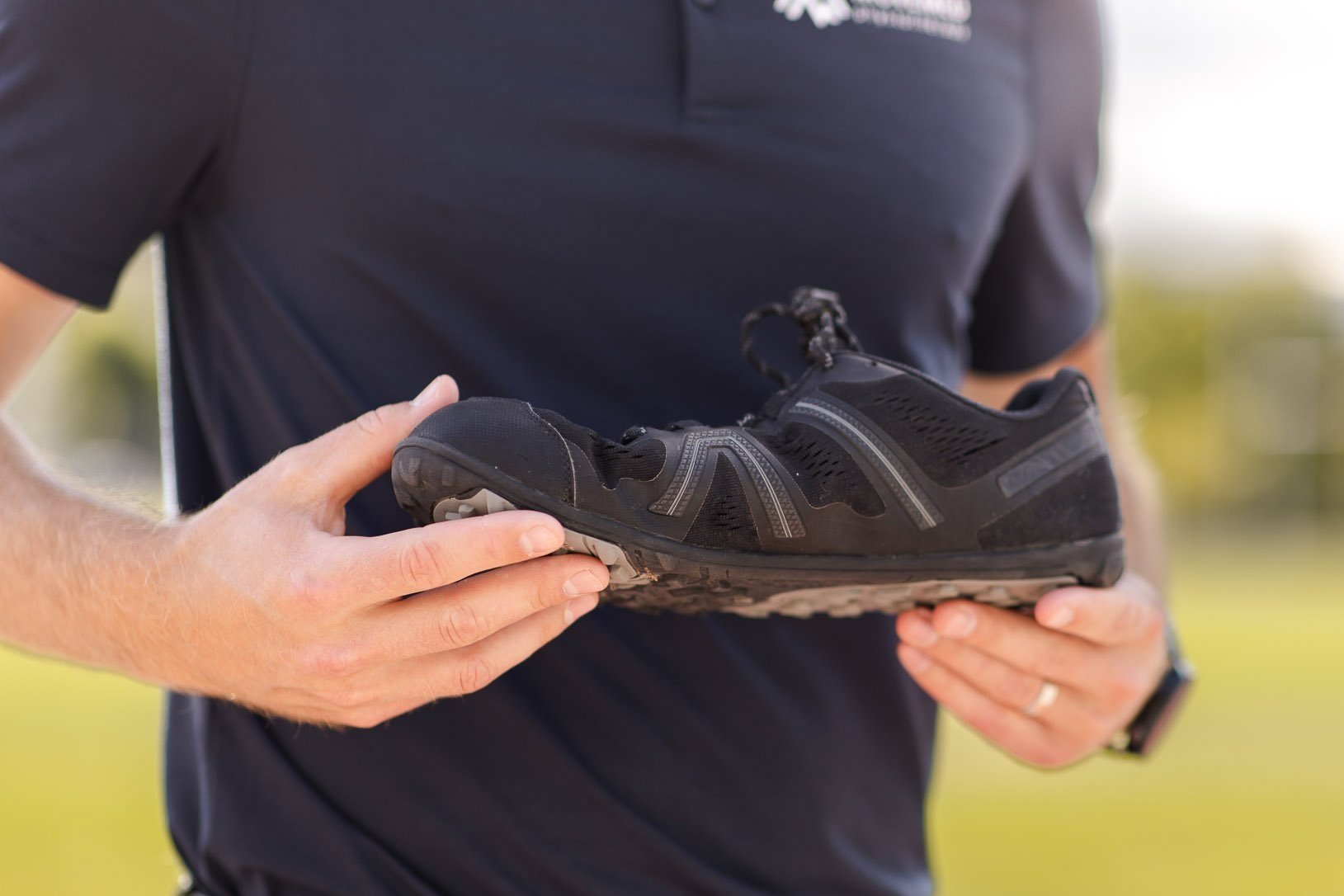
If your assessment suggests a footwear change could help manage an injury or improve performance, fall is the ideal season to make the switch. With lower mileage, fewer races, and more recovery time, your body can gradually adapt to new shoes without added stress.
Start slowly—mixing short runs in the new footwear while keeping your old shoes for longer sessions. This gradual approach helps your muscles, tendons, and joints adjust, reducing injury risk and maximizing the benefits of your new footwear. By spring, your body—and your shoes—will be fully ready to perform at their best.
4. More Time = Better Strength Gains
Strength training is non-negotiable for healthy, durable runners—but it's often the first thing to disappear during peak season.
Fall gives us:
Fewer races
More flexible schedules
The opportunity to progress strength without fear of soreness before a big run
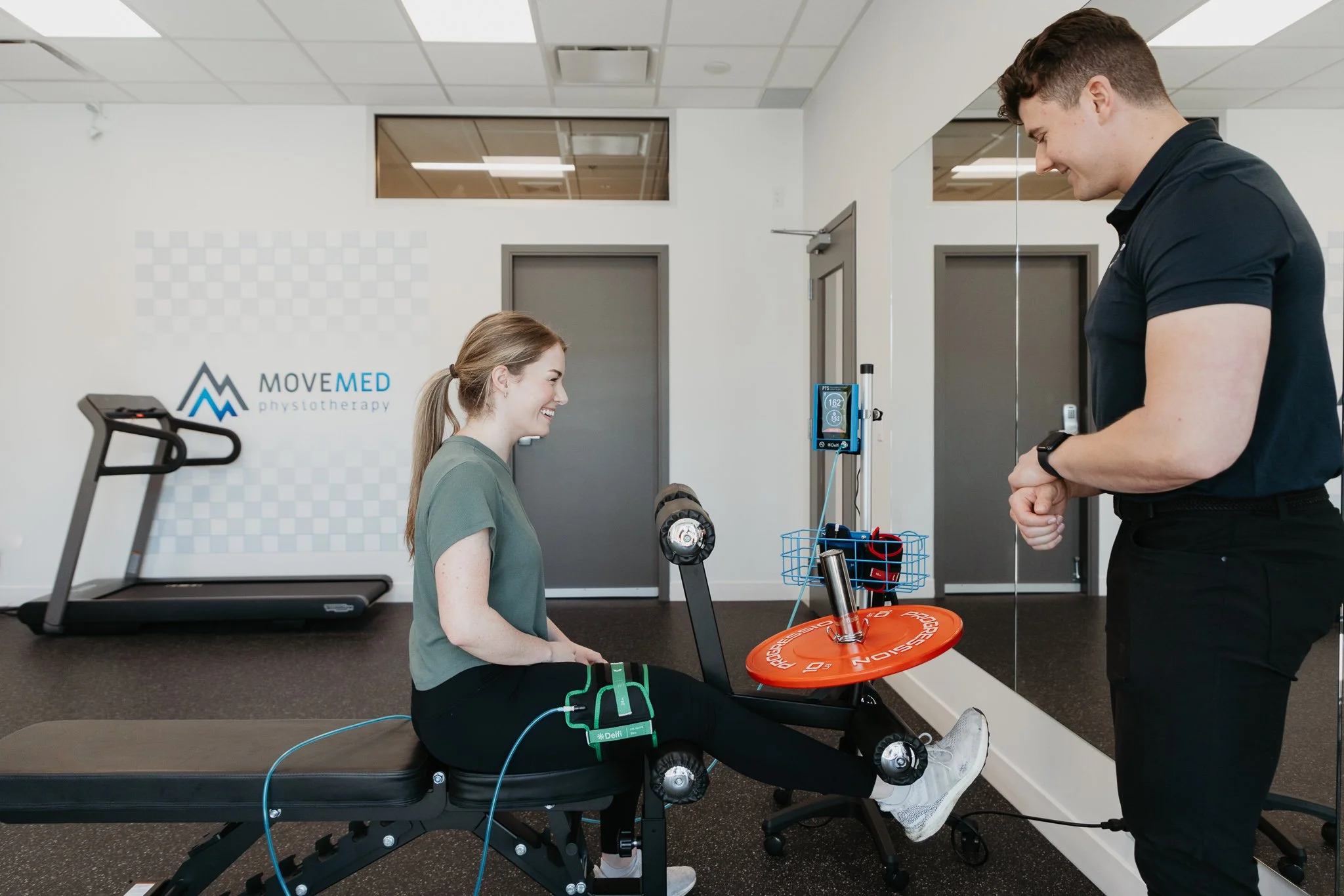
Using your running assessment, we can create a targeted strength program that supports:
Hip stability
Better push-off mechanics
Improved shock absorption
More efficient stride
This is the season where strength work actually sticks.
5. Set Yourself Up for Your Best Next Season
Think of a fall running assessment as pre-season prep rather than post-season recovery. You’re giving yourself:
A clean slate
A customized plan
Time to build good habits
A stronger foundation for next year’s PRs
By spring, you won’t be “starting over”—you’ll be starting ahead.
