

How Does Your Body Handle Load While You Run?
What You Can Learn from Our Physiotherapy Running Assessments with Runeasi
Written by Bea Francisco, BKin, MSc, MPT
Whether you are new to running, coming back after some time off, or chasing new personal bests, understanding how you move is a game-changer. A gait analysis provides insight into your running mechanics - not just what your stride looks like, but how your body manages load and movement with every step.
1. Get a Clear Picture of Your Running Mechanics
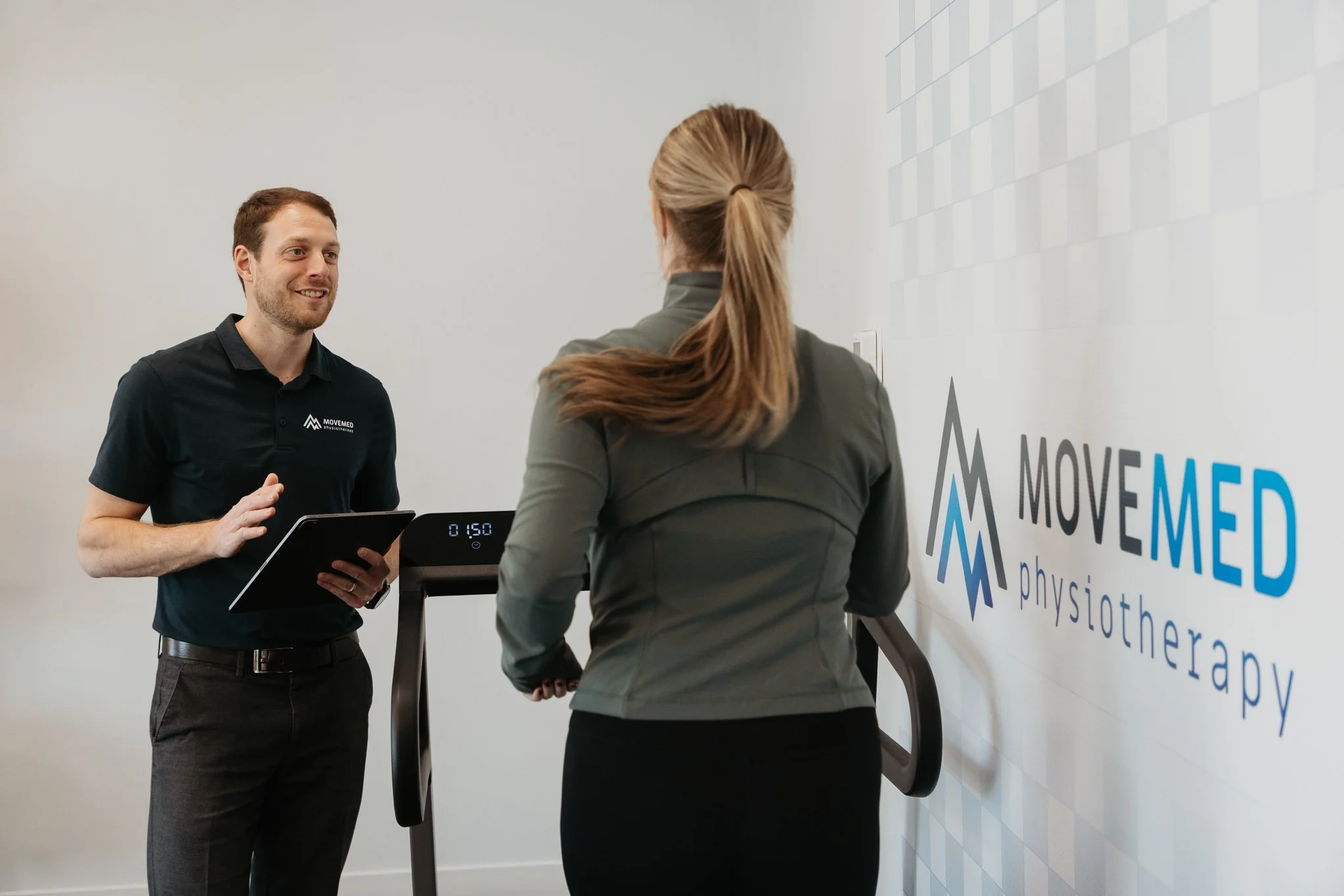
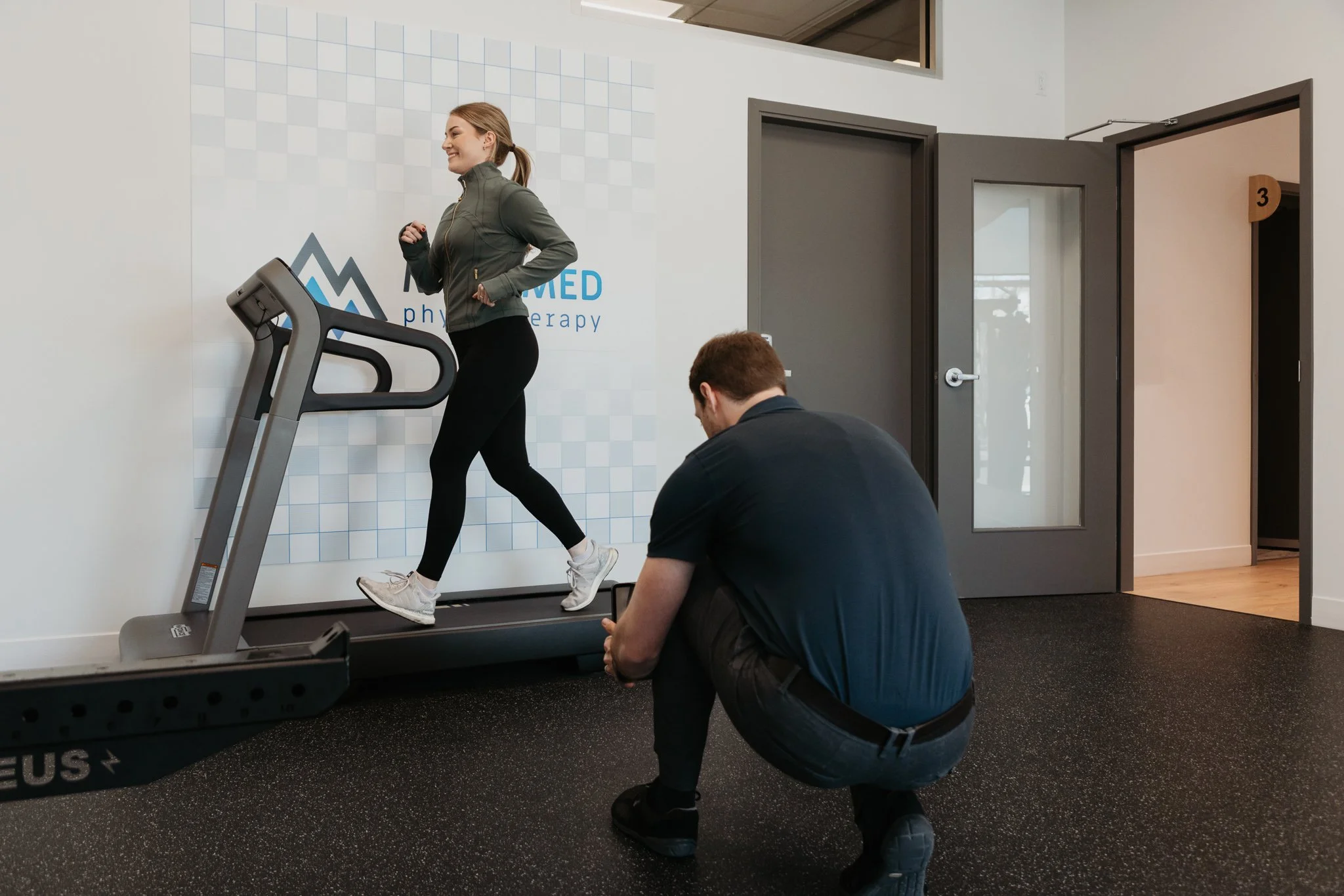
In a gait analysis, we look at your running stride from multiple angles and record high-definition video to see exactly how you move. This helps us understand patterns that might be subtle or hard to notice with the naked eye. With this information, we can tailor recommendations that fit your unique movement profile - not a one-size-fits-all approach.
2. Your History and Goals Matter
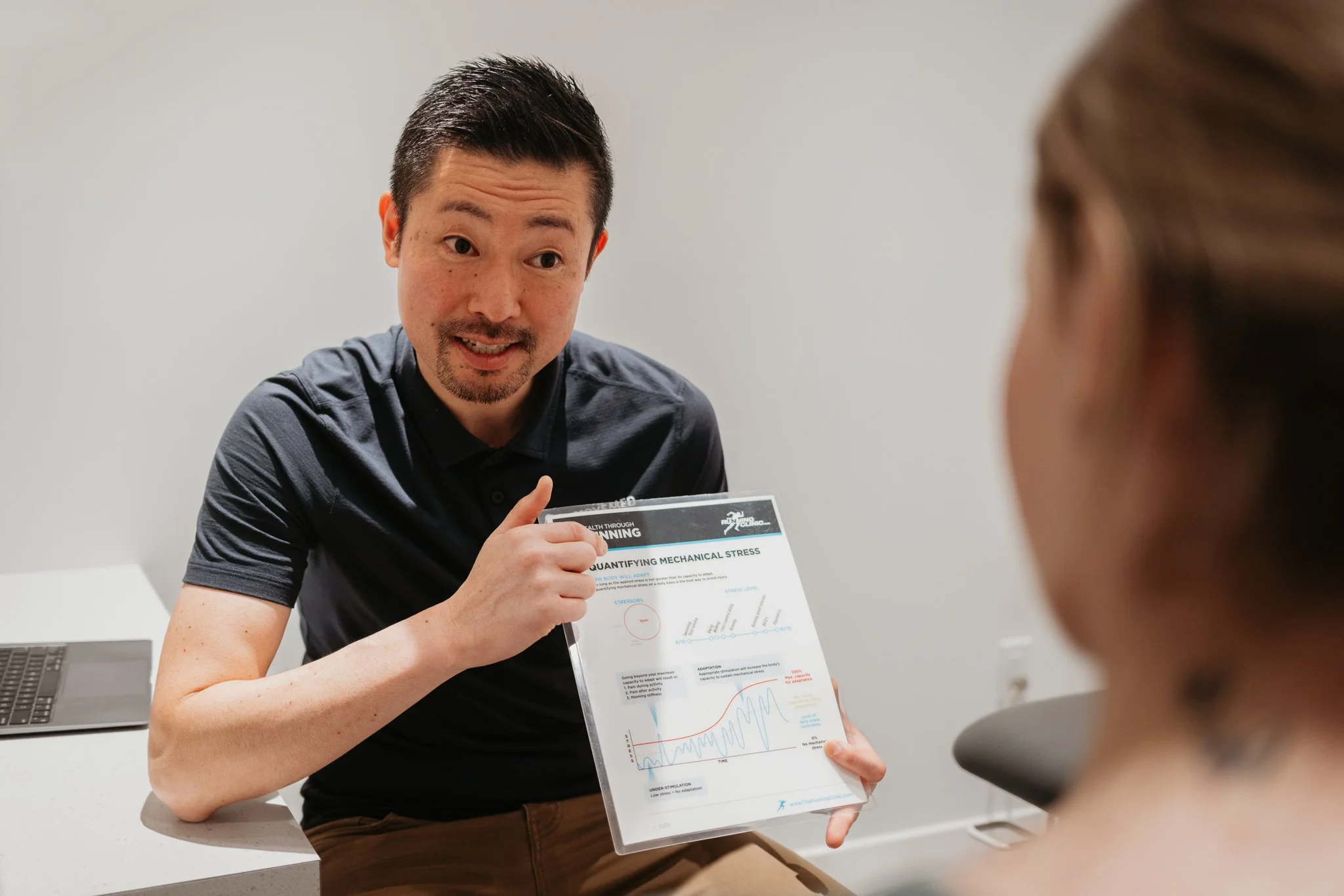
Your assessment begins with a thorough conversation - we want to understand your running history, health and injury background, training habits, and running goals. Context matters. Your gait analysis isn’t interpreted in isolation, it’s understood in relation to your body, your training, and where you want to go next.
3. Objective Data with Advanced Runeasi Technology
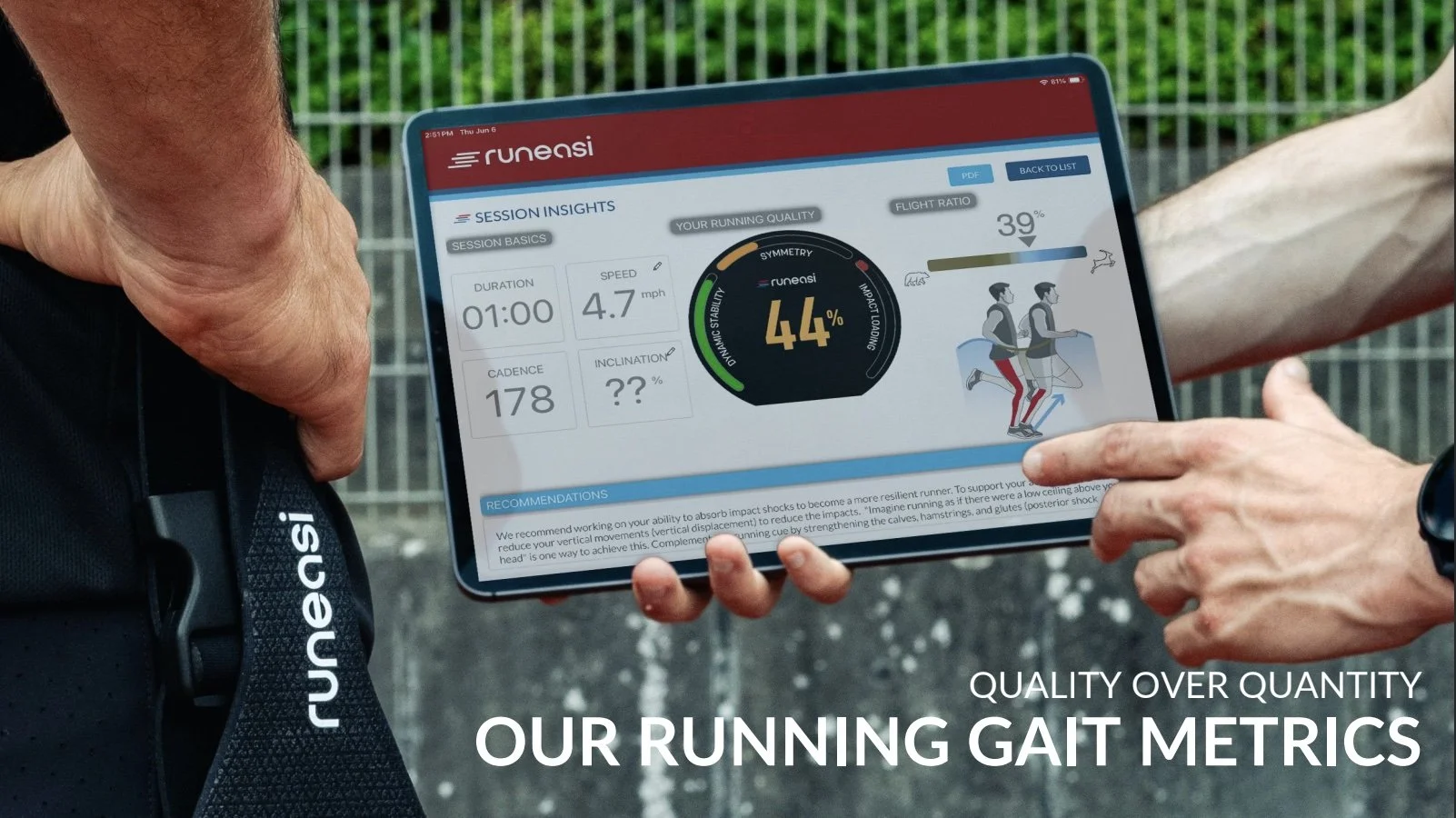
In addition to high-resolution slow-motion videos from different angles, we use advanced wearable technology from Runeasi. This lightweight sensor is worn around your lower back, close to your body’s centre of mass. It captures three-dimensional movement data while you run, providing detailed metrics about how your body moves and manages load in real time.
Using Runeasi, we can measure key aspects of your running mechanics: impact loading, dynamic stability, and symmetry. Impact loading shows how quickly and how much force travels through your body with each step. Dynamic stability reflects how well you control your trunk and pelvis while moving. Symmetry reveals differences between your right and left sides, helping highlight subtle imbalances that are hard to see with the naked eye.
The system has been validated against lab-based equipment and is supported by over a decade of published research. This allows us to combine clinical expertise with precise, objective data - giving you a clearer understanding of your running mechanics.
4. Personalized, Practical Recommendations You Can Use Right Away
After your assessment, we can provide individualized advice on topics such as:
Running technique
Training guidance
Exercise recommendations
Footwear considerations
These are not generic tips, they’re based on your personal movement patterns and goals. And we’ll send videos and notes directly to you, so you can revisit them as you train.
5. Track Progress Objectively
A gait analysis doesn’t just capture a single moment in time, it gives you a baseline to compare against later. Whether you’re returning from a break, want to run faster and injury free, or want to fine-tune your running as a “masters” runner, you can see how your running quality evolves over time.
Who Can Benefit from a Gait Analysis?
You might gain value from a running assessment if you are:
New to running
Navigating an injury or have had recurring running-related issues
A road or trail runner, ultramarathoner, or triathlete looking to improve your running goals
Returning to running after a long break
A “Master’s” runner dealing with joint discomfort or osteoarthritis
Wanting to be a more efficient runner

Why Runners Choose Our Clinic:
Our physiotherapy clinic is uniquely built around a deep understanding of running.
All of our physiotherapists are registered professionals, runners themselves, and proud running nerds.
We are all certified by The Running Clinic to assess and treat runners, ensuring that our approach reflects current, science-backed best practices.
We stay up to date with the latest science, and actively produce sports medicine research published in top scientific journals.
We love learning - and teaching other healthcare professionals locally and around the world.
Our founder, JF Esculier, is the only physiotherapist in Canada who also has PhD in running injuries and knee pain.
Our team meets regularly to fine-tune our clinical skills.
FAQs
If I’m injured, should I book a regular physiotherapy assessment first, or a running gait analysis?
1
We highly recommend if you have an active injury (or currently experience pain with running) to book a regular physiotherapy assessment first, as your injury might be changing the way that you run, and confirming the type of injury you have will impact our recommendations.
Are running physiotherapy assessments covered by extended health benefits?
2
Our running assessments are considered physiotherapy assessments, and they are covered by most extended health benefit plans. We offer direct billing to most insurance companies.
What should I bring to my running gait assessment?
3
Please bring clean running shoes (no dirt or small rocks in the sole), running shorts, and a sports bra if appropriate. You’re welcome to bring more than one pair of running shoes if you would like us to look at them.
How long can I expect to run on the treadmill?
4
Clients can expect to run for up to 15 minutes on the treadmill, and this is usually broken up into smaller bouts as we take different videos.
Can these be done virtually?
5
These sessions are best done in person, however if you are unable to make it in person to our physiotherapy clinic in Kelowna, BC, we are able to analyze videos without the Runeasi component. Please give us a call at 778-940-6495 if this is something you might be interested in, to learn more about whether this may be appropriate for your case.
What if I’m not comfortable running on the treadmill?
6
Although the treadmill is preferred for analysis so we can control the speed during different conditions, we are able to take videos of you running outside in our parking lot, and the Runeasi sensor will work outside as well.
Do you still have questions? Feel free to give us a call at 778-940-6495 or send us an email at info@movemed.ca and we’d be happy to help.