

A Smarter Approach to Postpartum Running
Written by Bea Francisco, BKin, MSc, MPT
There’s a lot of weird advice out there about running postpartum.
“Just wait 6 weeks.”
“Don’t run for 3 months.”
“Just do more kegels.”
Some of it is outdated. Some of it is oversimplified. And some of it just doesn’t work in real life.
So instead - here’s what actually works when getting back into running after having a baby.

Ignore the Timeline (Yes, Really)
Myth: “6-week clearance means you’re ready to run.”
Also a myth: “You have to wait 3 months minimum.”
Here’s the reality: There is no universal timeline.
Some people can return to running as early as 3 weeks postpartum, while others need longer — and there’s no set 12-week minimum either.
What matters more:
Are tissues healed?
Are there symptoms like leaking, heaviness, or pain?
Can the body tolerate higher impact exercises?
It’s not so much about when… it’s how you approach your return to running that matters.
2. Build a Boring (But Powerful) Foundation
Not flashy, but it works.
Before running, the body should be able to do these without symptoms:
Walk 30–60 minutes comfortably
Perform single-leg strength work
Jog on the spot and hop
This is not a “bare minimum checklist” (hint - there isn’t one). If these exercises don’t feel good just yet, then you should spend time working on being able to do these without symptoms before running.

3. Start Slower Than You Want To
Here’s the thing - most people start way too fast.
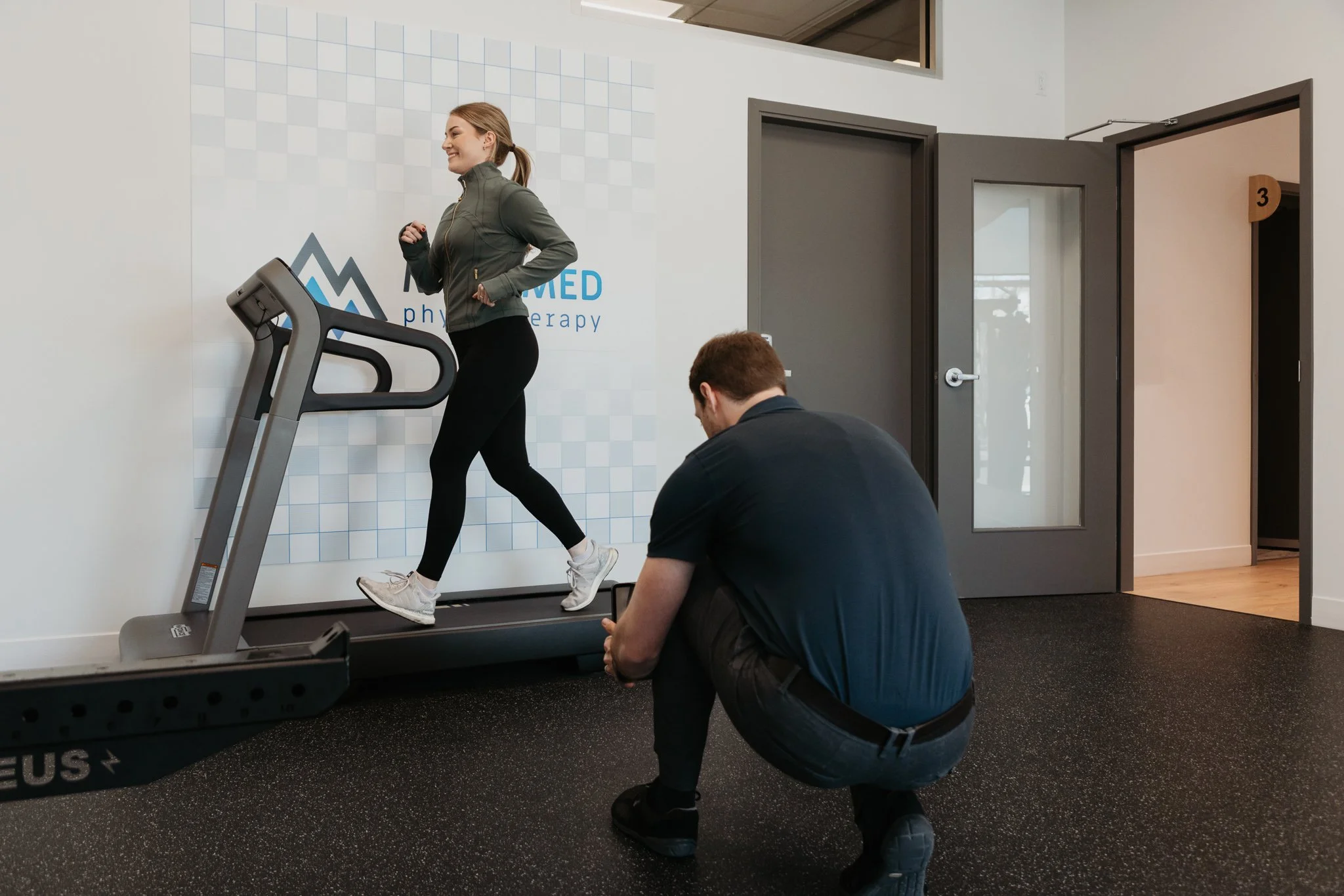
Begin with a gradual run/walk program, on flat ground at an easy, conversational pace.
Follow one simple rule: Change only ONE variable at a time (distance / time “on feet”, speed, or hills).
Don’t be afraid to ask a running and pelvic health physiotherapist for a personalized return to running plan - your program should be individualized, gradual, and symptom-based.
4. Don’t Ignore Symptoms
Leaking. Heaviness. Pain. Pressure. These are often dismissed as “Normal after having kids”, or “Something to push through.”
They’re not. They’re feedback.
Instead of quitting, or ignoring and pushing through - ask yourself:
“What level of activity is symptom-free?” and “Can I modify my activity so that I don’t experience these symptoms?”
If symptoms show up, it doesn’t mean that running isn’t possible, or that something is “wrong” - it means an adjustment is needed.
The body is adaptable - it just needs the right progression.
A running and pelvic health physiotherapist can take the guesswork out and help you navigate with a tailored recovery plan.

5. Respect Load vs Capacity
This is the concept that changes everything.
Your body’s capacity (sleep, strength, stress, nutrition) needs to match the load (running volume, speed, impact).
Postpartum is in reality, the perfect storm for reduced capacity: less sleep, healing tissues, more stress, etc. lead to reduced ability to recover.
So even if running feels “easy,” the body may still be under-recovered.
This actually matters a lot, and is also why starting slower than you think will be helpful!
Remember: This Isn’t About “Bouncing Back”
It’s about building something new.
Running postpartum isn’t about returning to who you were before.
It’s about creating a version of running that fits your life now - one that’s sustainable, flexible, and actually feels good.
The Bottom Line
There is no perfect timeline
Capacity comes before mileage
Symptoms are feedback - not failure
Postpartum running doesn’t need to feel confusing or discouraging.
With the right approach, it can feel strong, empowering, and sustainable - for the long run.
At MoveMed Physiotherapy, our team of running-certified and pelvic health physiotherapists (Bea Francisco and Sydney McNulty) brings together both science-backed rehab and return-to-running expertise. As moms and runners ourselves, we also relate to the real-life experience of recovering after pregnancy and getting back to movement.